Pergola types · 03 of 06

Wood & Cedar Pergolas
in Tucson.

Kiln-dried cedar. Doug fir beams. The pergola your neighbors will ask about.

A wood pergola is a different conversation than aluminum, and you should have it with your eyes open. In Sonoran sun wood realistically gives you 5 to 15 years, the re-stain cycle is every 3 to 5 years, and the wind rating is the lowest of any material here. Knowing all that, some people still want wood, and they are not wrong. A cedar pergola in the Catalina Foothills, weathered to a warm silver-bronze, has a character aluminum cannot copy. Just buy it for that reason, not because someone told you it lasts 25 years.

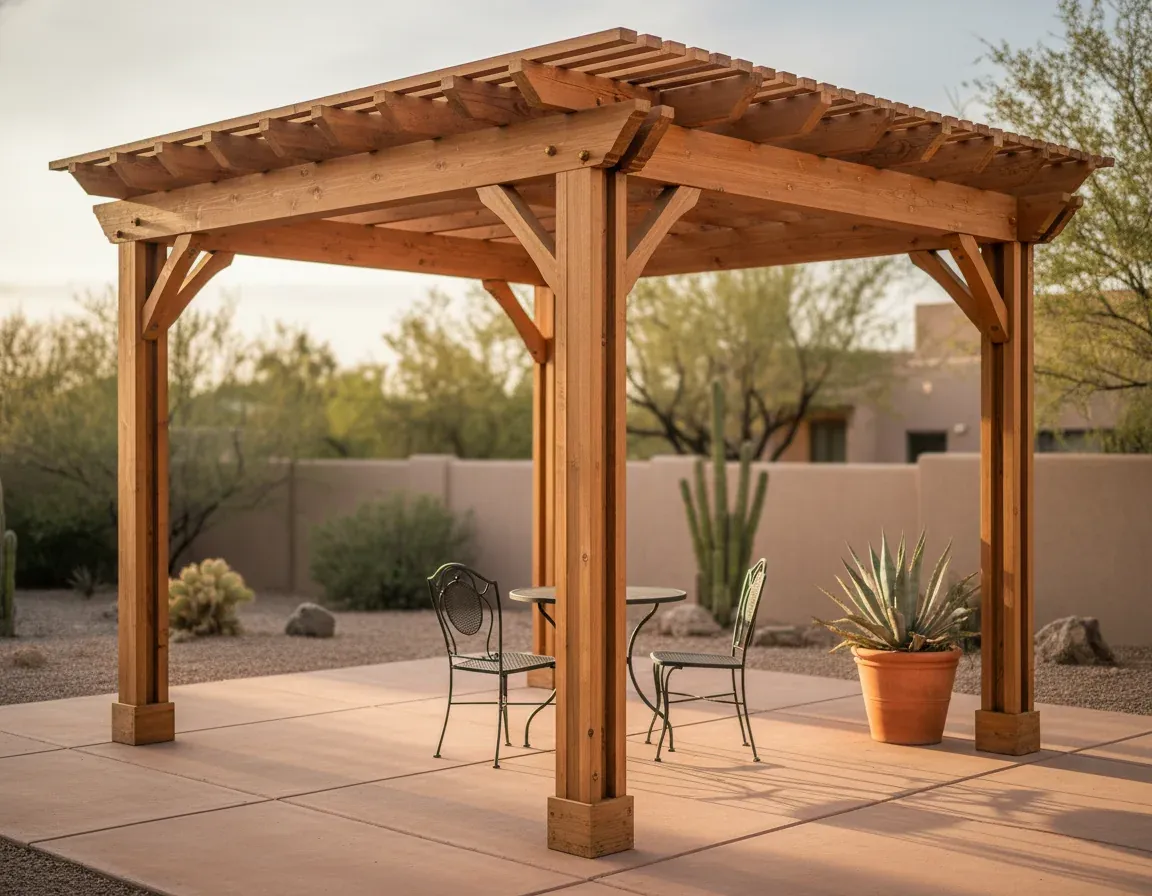
Cedar pergola showing warm grain over a Tucson patio

The pergola with grain

It looks handmade
because, in most respects, it is.

There is a reason wood is still the material homeowners picture when they say the word pergola. It has warmth. It has grain. It throws softer shadows than any other pergola material. And on a Tucson lot, where the architecture leans toward Spanish revival, ranch, and Southwest territorial, a kiln-dried cedar pergola has a way of looking like it was always supposed to be there.

Every project here starts with a licensed Tucson pro who actually knows what they're doing with wood in the Sonoran desert. The species selection matters. The kiln-drying matters. The sealer choice and the joinery technique matter even more. One bad call on any of those, and you're replacing posts in seven years instead of refinishing them.

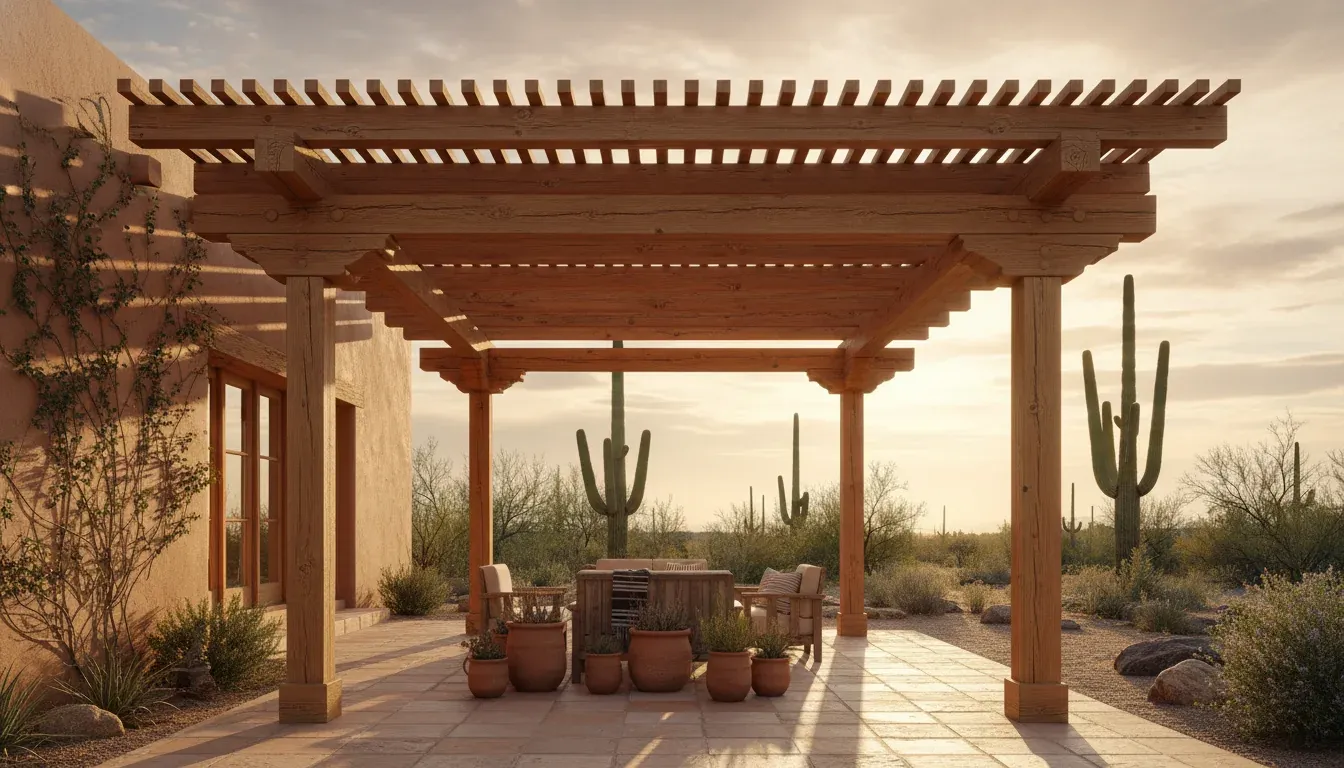
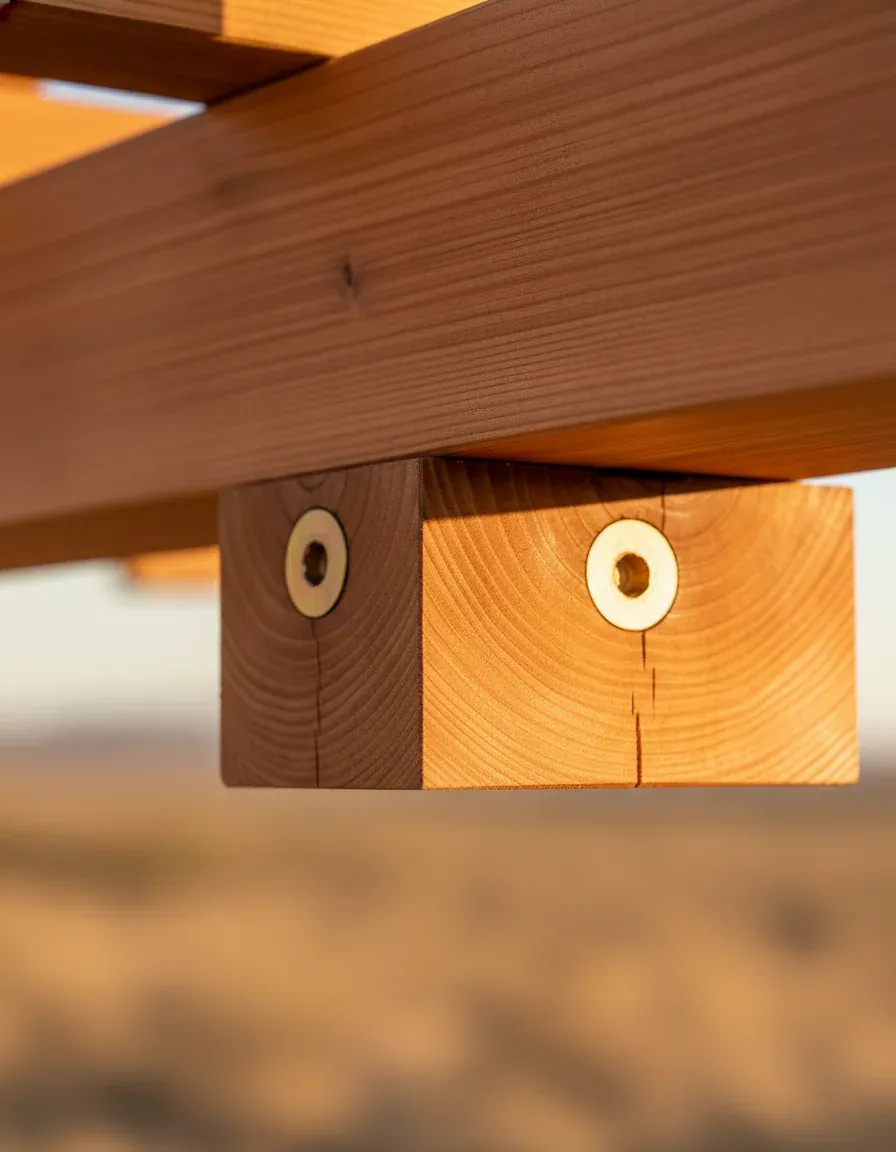
Detail of timber-frame mortise-and-tenon joinery on a cedar pergola

Three species,
three different conversations.

Western red cedar pergola with warm grain over a Tucson patio

Western Red Cedar

The default · 80% of wood builds

Lifespan
8–15 years here
Monsoon wind rating
Up to 80 mph
Maintenance
Re-stain every 3–5 yrs
Look
Warm grain, weathers to silver-bronze
Typical install
5–8 days on site

Best for

Spanish revival, ranch, territorial, and most Sonoran residential architecture

Douglas fir pergola with traditional timber-frame joinery

Douglas Fir

Longer spans · Heavier timber-frame

Lifespan
5–12 years here
Monsoon wind rating
Up to 80 mph
Maintenance
Re-stain every 3–4 yrs
Look
Tighter grain, takes darker stains well
Typical install
6–10 days on site

Best for

Larger pergolas (16'+ spans), timber-frame styling, darker stained finishes

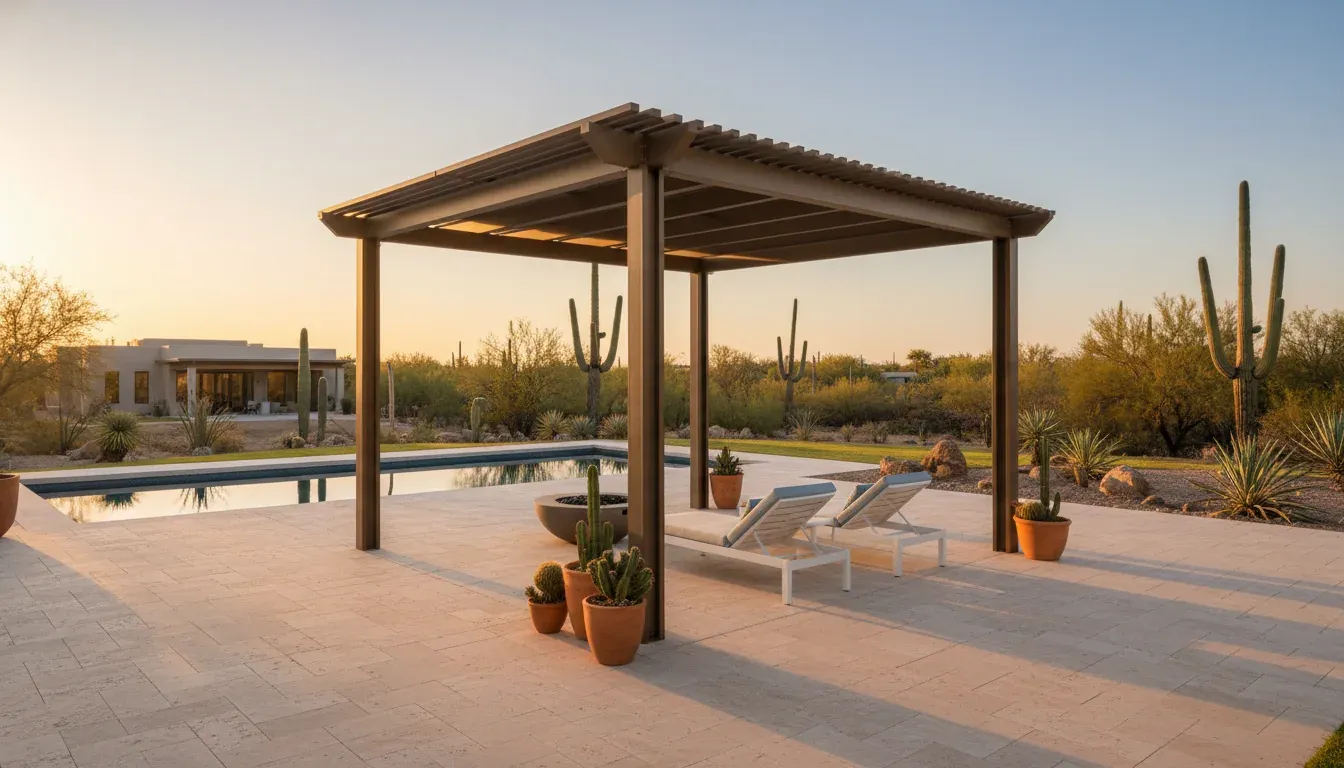
Premium ipe wood pergola with deep brown grain

Ipe (Brazilian Walnut)

Premium tier · the longest wood lasts here

Lifespan
15+ years here
Monsoon wind rating
Up to 90 mph
Maintenance
Annual cleaning only
Look
Deep chocolate, almost stone-like density
Typical install
8–12 days on site

Best for

High-end builds where you want wood specifically and want the longest-lived version of it

Cedar for 80% of builds. Doug fir for longer spans and heavier timber styling. Ipe when you want the 40-year horizon and zero maintenance.

Standard inclusions

What ships on a licensed
Tucson wood build.

  1. Kiln-dried structural lumber

    12–15% moisture content, species per engineering

  2. Hot-dipped galvanized hardware

    Or stainless. Nothing rusts and streaks the wood

  3. Mortise-and-tenon joinery

    Or through-bolts. Never lag screws into end-grain

  4. Marine-grade penetrating sealer

    UV inhibitors, applied on all six sides before assembly

  5. Embedded post bases with standoffs

    Keeps wood off concrete, prevents moisture wicking

  6. Optional retractable canopy

    Adjustable overhead shade for the open-roof variants

  7. Borate pre-treatment for fir

    Standard termite resistance on Doug fir builds

  8. 5-year sealer warranty

    Re-stain service offered at the 4-year mark

Decorative elements, corbels, end-cuts, lattice patterns, and stain finishes are coordinated during design. The structural and finish standards do not flex.

What it costs in Tucson

What actually drives
a wood quote.

  1. Species and grade

    Cedar, Doug fir, and ipe sit at very different price points, and the grade within a species swings it again.

  2. Joinery complexity

    Full timber-frame joinery, decorative corbels, and rafter tail detailing are labor, and labor is most of what separates two wood pergolas.

  3. Span and post count

    Wood needs more posts to clear the same opening than metal does, which shapes both the price and the look.

  4. The refinishing cycle

    Wood is the one material here that needs re-staining every few years in full sun. That recurring cost belongs in the comparison.

Wood projects are quoted after a site visit. Read the maintenance section above before you weigh the number, because with wood in this climate the install cost is only the beginning of what you are signing up for.

Why it works in Tucson

Wood in the desert
is a paradox.

The dry climate is brutal on finishes but kind to the wood itself. Cedar rots in coastal Florida and dries out here instead, so the failure mode is checking, splitting, and a finish that surrenders rather than rot. That still puts a Tucson cedar pergola at 5 to 15 years, and the re-stain cycle is what decides which end you get.

  1. Low humidity, high UV

    39% average humidity, 11+ UV index

    Tucson's dry climate is kind to the wood itself but brutal on finishes. Cedar rots in coastal Florida and dries out here instead, so the failure mode is checking, splitting, and a finish that surrenders rather than rot. That still puts a Tucson cedar pergola at 5 to 15 years, and the re-stain cycle is what decides which end you get. The sun bleaches surface fibers and breaks down sealers from the top down. The sealer schedule, not the species, is what determines how long your pergola looks intentional.

  2. Monsoon wind

    80 mph wind rating

    Wood pergolas top out at roughly 80 mph wind rating, well below aluminum or steel. For most Tucson residential lots, that's adequate. Monsoon peak gusts in residential areas typically max out at 60 to 70 mph. For exposed ridgeline lots, an aluminum frame is the better call, since the systems we install are rated from 170 mph.

  3. Architectural fit

    Adobe, stucco, viga, cedar trim

    Tucson's residential vocabulary is built around natural materials. A cedar pergola on a Spanish revival home reads as native to the property in a way no aluminum frame can. Pueblo-style and territorial-style homes in particular are almost always better served by wood than by metal.

  4. Temperature swings

    60°F daily shifts

    Wood handles Tucson's daily swings well, better than it handles the freeze-thaw cycles of northern climates. The kiln-drying and the sealer do most of the work. Properly built wood pergolas in Tucson rarely show seasonal checking after the first year.

  5. Patina, on purpose

    Silver-bronze weathering

    Left unstained, cedar in Tucson weathers to a soft silver-bronze in 18 to 24 months. Many clients prefer this look and skip the stain altogether, which converts the maintenance schedule from re-stain every 3 to 5 years to annual cleaning only. The structural integrity is the same either way.

The sealer schedule, not the species, is what determines how long your pergola looks intentional.

HOA, permits, Pima County

Where the stain sample
becomes the project.

Wood pergolas in Pima County require a residential building permit. Attached installations require an engineering stamp. Freestanding builds require footing engineering and inspection. A licensed installer handles every page of it.

The HOA side requires more care than aluminum

Wood pergola ARC submissions in the Foothills and Oro Valley typically require stained finish samples on actual cedar or fir, not just a paint chip. Color match to existing home trim within the HOA's approved palette. Renderings showing the pergola in context from multiple angles, not just a top-down plan. And in some communities, a maintenance plan specifying re-stain frequency.

Foothills, Oro Valley, and Skyline-area HOAs typically approve cedar in natural or warm walnut stain finishes the most quickly. Bright or contemporary stain colors, gray-wash, white-wash, or black, often face additional scrutiny and occasional rejection.

A licensed Tucson installer with experience in wood pergola ARC submissions across the Foothills and Oro Valley can guide you toward finishes that won't trigger a second review.
How the project moves

five steps, no surprises

From physical samples
to first patina.

  1. Reach out

    Day one

    A quick call with a licensed Tucson wood pergola pro covers your home, your trim colors, the look you have in mind, and a rough budget. You get straight answers to your first questions before anyone visits.

  2. Schedule a consultation

    Week 1

    A licensed installer visits, looks at your existing trim colors and the surrounding architecture, and brings physical wood samples, cedar, fir, and ipe, in three stain finishes for you to set against your trim. The species and finish are fit to the character of your home, in person.

  3. Review design options

    Weeks 2–3

    Two design directions come back with a line-itemed quote. Wood designs are more variable than aluminum because joinery style, post sizing, and decorative elements all sit on the table for discussion.

  4. Proceed with installation

    Weeks 3–10

    Pima County permits and any HOA submission are handled first. Wood submissions in the Foothills and Oro Valley run slightly longer than aluminum because of the stain-sample review. Most wood pergolas are partially shop-fabricated, then assembled on site over 5 to 10 working days, with the sealer applied to all six sides of every member before assembly. That detail is one of the things that separates a 20-year wood pergola from an 8-year one.

  5. Final walkthrough & inspection

    Final day

    Your installer demonstrates any retractable elements, hands you the warranty binder and care instructions, and schedules your first complimentary re-stain inspection at 24 months. A check-in follows at 30 days, 6 months, and 18 months.

Every step has a name and a date. You'll never have to ask where we are.

Wood & cedar reviews

200+ Tucson pergolas since 2019

Tucson homeowners on their
cedar pergolas.

Kiln-dried cedar, sealed on all six sides, and the builder cleared Oro Valley ARC on the first try. Two years in, one re-stain scheduled, and it looks like it grew out of our Santa Fe-style house.
Lena P. Oro Valley · Cedar pergola
We had a sagging old wood pergola. Instead of selling us a teardown, the pro did the post and beam repair and re-stained the whole thing. Honest work.
Greg H. Midtown Tucson · Wood pergola repair
Douglas-fir timber-frame arbor over the garden gate. Heavy, beautiful joinery, borate-treated for termites. The installer understood exactly the rustic look we wanted.
Diane W. Sahuarita · Doug fir arbor

Wood pergola installation across greater Tucson

Cedar, Doug fir & arbor builds across Southern Arizona.

Licensed wood pergola installation, for cedar, Douglas fir, and ipe pergolas, arbors, and wood pergola repair, throughout the greater Tucson metro and Pima County.

  • Tucson
  • Catalina Foothills
  • Oro Valley
  • Marana
  • Vail
  • Sahuarita
  • Green Valley
  • Sabino Vista
  • Saguaro Ridge
  • Dove Mountain
  • Pima County
  • And nearby areas

Wood pergola questions

the questions we get most

What every Tucson homeowner
asks about cedar.

  1. 01. How long does a wood pergola last in Tucson?
    Realistically 5 to 15 years, and where you land in that range is decided almost entirely by whether the re-stain actually happens on schedule. Kiln-dried cedar with disciplined sealer maintenance reaches the top of it. Doug fir sits lower; ipe is the one species that reliably clears fifteen. Pergolas that skip the 3 to 5 year re-stain cycle start needing post replacement well before that. You will see 20 and 25 year figures quoted for cedar elsewhere. Those come from milder climates. This is 3,800 hours of direct sun a year, and wood is the material it punishes hardest.
  2. 02. How often do I need to re-stain a cedar pergola in Tucson?
    Every 3 to 5 years for stained finishes. UV inhibitor sealers in Sonoran sun typically lose effectiveness around year 4. Many licensed installers offer a re-stain service at the 4-year mark for a fraction of the original cost. If you leave the cedar to weather naturally, the re-stain becomes optional and the schedule converts to annual cleaning.
  3. 03. Cedar vs Doug fir vs ipe, which should I choose?
    Cedar for 80% of Tucson builds. Best balance of cost, looks, and longevity. Doug fir for larger spans, heavier timber-frame styling, or darker stain finishes. Ipe for high-end builds where you want wood specifically and want the version of it that holds up longest here, and the budget supports a substantial premium over cedar.
  4. 04. Will my wood pergola crack or split?
    Properly kiln-dried wood, sealed on all six sides before assembly, will show minor surface checking, small hairline cracks visible at close range, within the first year as the wood acclimates to your specific microclimate. This is cosmetic and expected. Structural cracking or splitting is not, and indicates either green lumber, inadequate sealer, or poor joinery. We don't install that way.
  5. 05. Can wood pergolas survive Tucson monsoons?
    Yes, with appropriate engineering. A properly anchored wood pergola is rated to 80 mph wind events. For typical Foothills, Oro Valley, and Marana residential lots, that's well above the historical peak gust data. For exposed ridgeline lots or properties with extreme wind exposure, steel or aluminum is usually the better call instead.
  6. 06. What about termites?
    Cedar and ipe are both naturally termite-resistant. Cedar contains thujone, a natural insect deterrent, and ipe is dense enough that termites generally don't penetrate it. Doug fir is more vulnerable and gets a borate pre-treatment as standard. Embedded post bases with standoffs keep all species off the ground, which eliminates the most common termite entry path.
  7. 07. Wood vs Alumawood for a Tucson pergola, which lasts longer?
    Alumawood, the wood-grain-embossed aluminum used for many Tucson patio covers, never needs re-staining and won't warp, split, or attract termites, so it outlasts real wood on maintenance alone. Real cedar or Doug fir gives you genuine wood grain, a warmer feel, and the traditional Sonoran look, at the cost of a re-stain every 3 to 5 years. If you want the wood look with zero upkeep, see our aluminum pergolas. If natural wood is the point, cedar is the Tucson default.
  8. 08. Can I get wood arbors and wood pergola repair in Tucson?
    Yes. A licensed installer can take on arbors, trellises, and pergola-arbor combinations as well as full pergolas, and many offer wood pergola repair, post replacement, beam and corbel work, and re-staining for existing structures. If you have a sun-damaged or sagging wood pergola, a licensed pro can repair or rebuild it rather than starting from scratch.

Have a question we didn't cover? Ask it in the form below. We answer most within the hour.

Local wood pergola installation you can count on

Want the warm, Sonoran look of natural cedar?

Kiln-dried cedar, Douglas fir, and ipe, sealed for desert UV and built to weather beautifully. Your project starts with a licensed Tucson wood pergola pro who fits the build to your home, your stain, and your timeline.

Or call (520) 639-9422 · Mon–Fri 8a–5p

Tell us about your lot, get a quote from a licensed Tucson wood pergola pro.

Call directly (520) 639-9422 Mon–Fri, 8a–5p · Most calls returned same hour

Service area

  • Tucson
  • Catalina Foothills
  • Oro Valley
  • Marana
  • Vail
  • Sahuarita
  • Green Valley

Request a quote

~3 min

Pergola type
Attached to the house, or freestanding?

Attached structures need a Pima County permit regardless of size, plus their own footings. Telling us now means the quote you get is the quote that holds.

We'll respond within one business day. Most quotes turn around inside a week.